Rug Restoration
Bringing Worn Rugs Back to Life
The Challenges of Rug Restoration
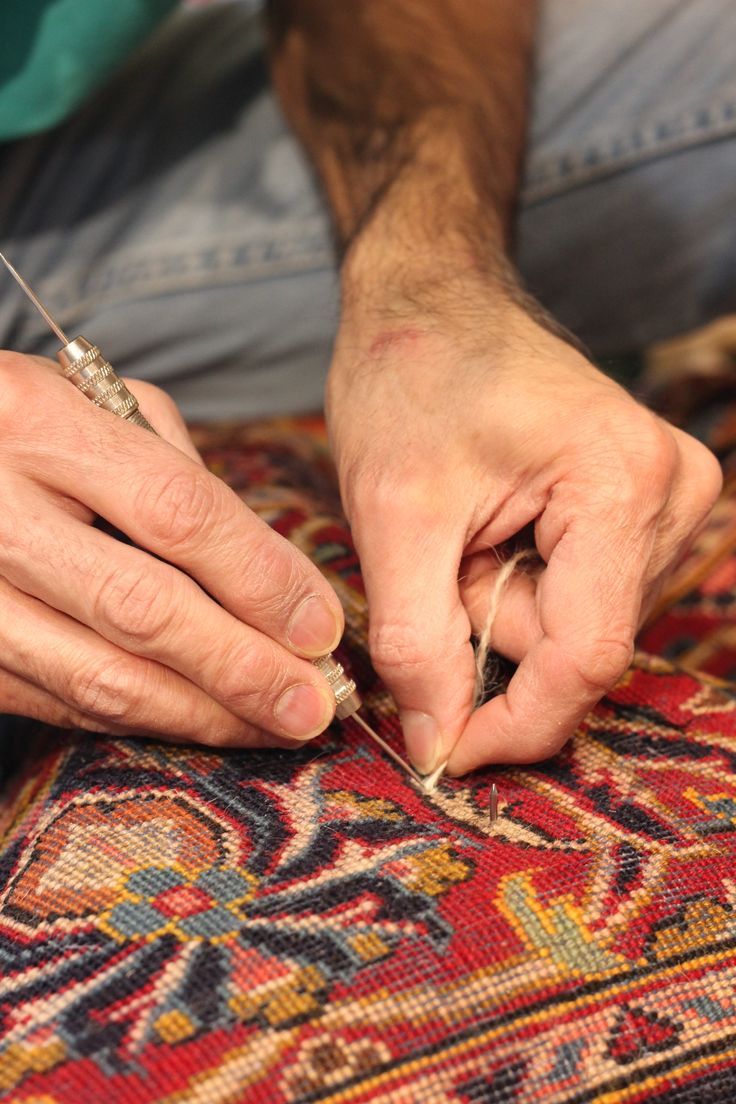
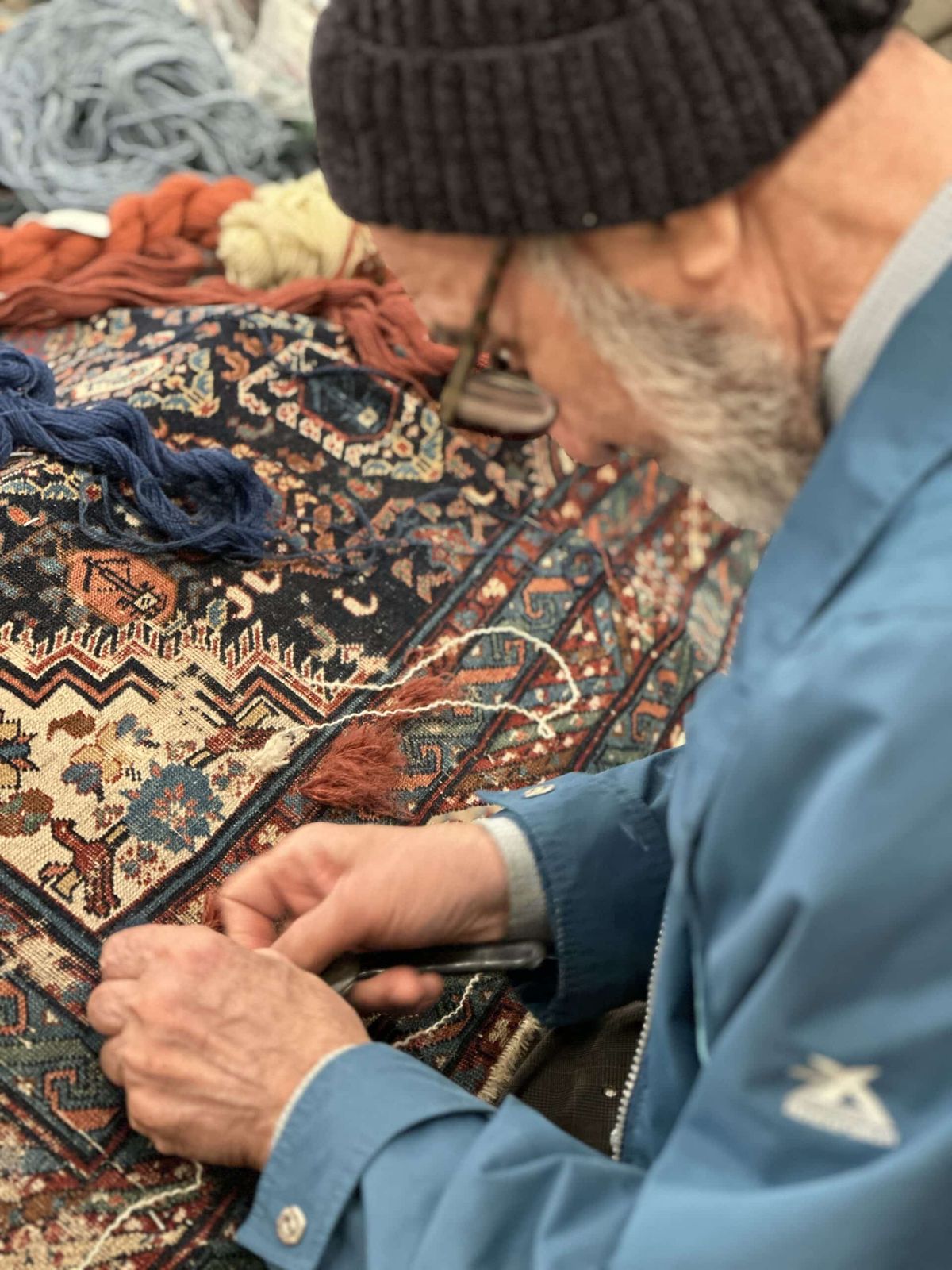
Rug restoration is an advanced skill that balances preservation with renewal. A single wrong shade or technique can leave a rug uneven, artificial, or even ruined. Key challenges include:
- Reweaving must replicate the original design knot by knot.
- New yarns must match the original in fiber, color, and quality.
- Fringes need tight overcasting to protect the foundation properly.
- Weak fringes or bindings can cause the rug to unravel over time.
- Overdyeing can cause color bleeding and loss of fine detail.
- Wrong dye type make the repaired area fade or change color.
- Uneven fading must be balanced across the rug for a natural look.
- Antique and vegetable-dyed rugs require special, rapid treatment.
- Tears must be reinforced properly or it will reopen and spread.
The right restoration doesn’t just repair damage. It gives your rug a second life in both strength and beauty.
The Challenges of Rug Restoration
Rug restoration is an advanced skill that balances preservation with renewal. A single wrong shade or technique can leave a rug uneven, artificial, or even ruined. Key challenges include:
- Reweaving must replicate the original design knot by knot.
- New yarns must match the original in fiber, color, and quality.
- Fringes need tight overcasting to protect the foundation properly.
- Weak fringes or bindings can cause the rug to unravel over time.
- Overdyeing can cause color bleeding and loss of fine detail.
- Wrong dye type make the repaired area fade or change color.
- Uneven fading must be balanced across the rug for a natural look.
- Antique and vegetable-dyed rugs require special, rapid treatment.
- Tears must be reinforced properly or it will reopen and spread.
The right restoration doesn’t just repair damage. It gives your rug a second life in both strength and beauty.
The Risks Most Rug Owners Face
Many rug owners delay restoration, or worse, trust their rugs to the wrong places, where work is rushed or faked. Common risks include:
- New colors fading or bleeding from unstable chemical dyes.
- Skipping dye tests before washing leads to color bleeding.
- Using glue or shortcuts instead of proper hand-stitching.
- Using low-quality materials leading to quick and repeated damage.
- Untrained workers replacing skilled restorers, leading to poor results.
- Outsourcing restoration without supervision, raising cost and risk.
- Overcharging for unnecessary extras due to owners’ lack of knowledge.
- Delivering late with quality far below the promised restoration.
Delaying restoration or choosing the wrong restorer can risk both your money and the rug you hoped to save.
How ROA Protects and Guides You
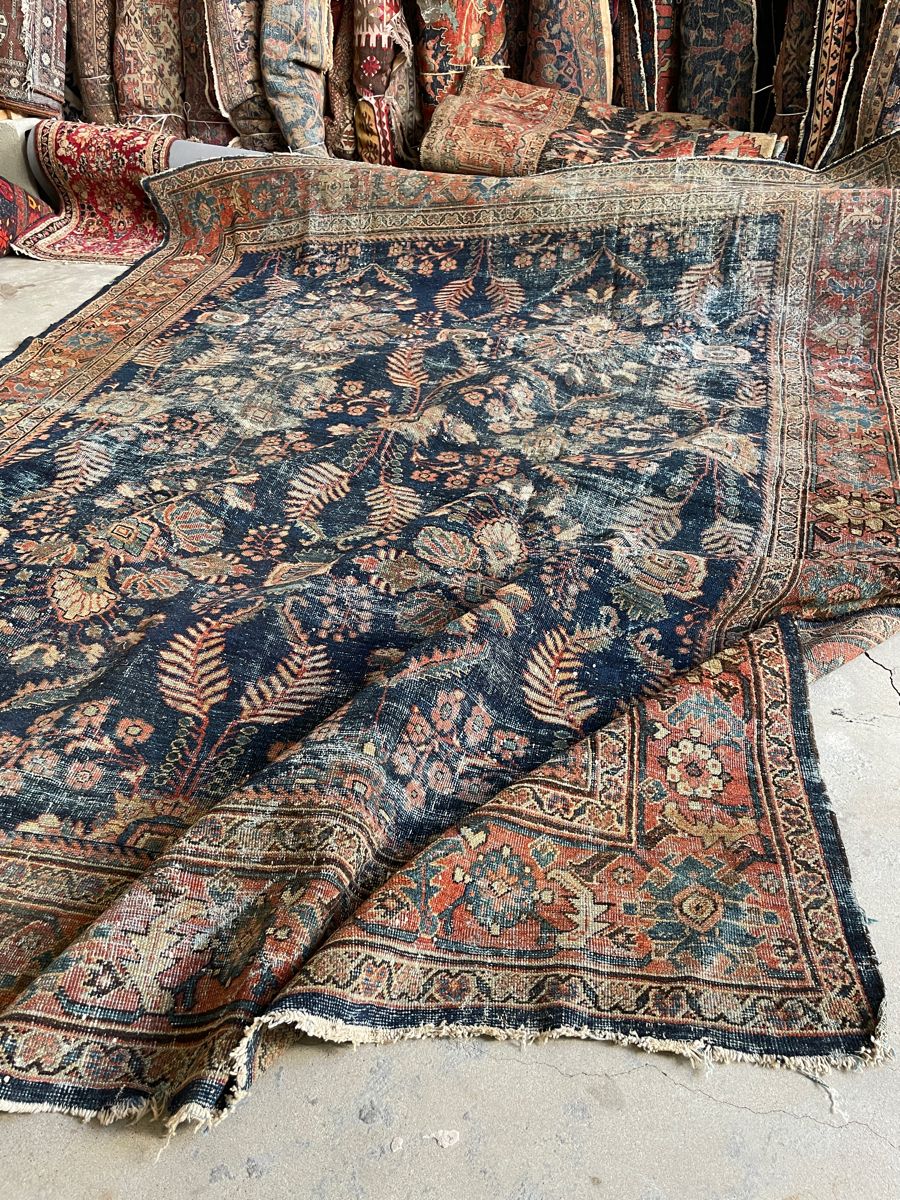
With ROA, restoration isn’t just a service, it’s a promise. Your rug is trusted only in the hands of true experts, and every step is overseen to ensure lasting quality.
- Expert inspection to determine what restoration is truly needed.
- Access to trusted master restorers with decades of experience.
- Colors, knots, and textures are matched for a seamless, authentic finish.
- A project manager oversees every stage and keeps you informed.
- We prevent overcharges for unnecessary restoration works.
- Standing by you if any issue arises, even after the restoration is done.
We make sure your rug’s restoration is done right the first time. With no risks, no shortcuts, and no guesswork.
Even One Wrong Shade Can Ruin It All
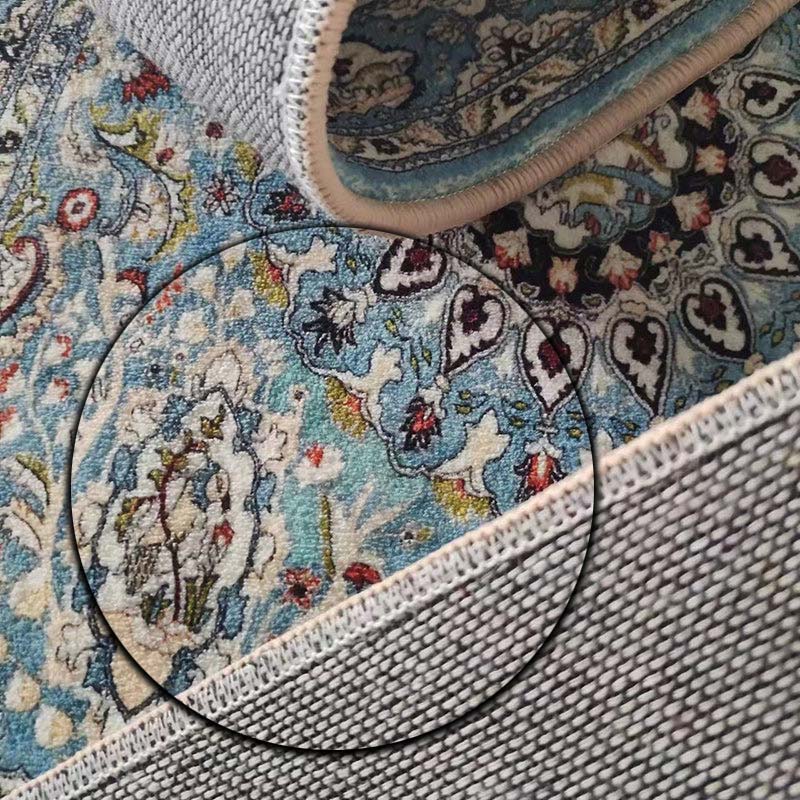
In restoration, even a slight mismatch in color or technique can leave the rug looking uneven, fake, or permanently altered.
That’s why true restoration requires expert testing and careful matching, so every knot blends seamlessly with the original design.
Why It Matters
The way your rug is restored can decide whether it remains strong and beautiful for generations or becomes too fragile to enjoy.
- Protects both the strength and beauty of your rug.
- Preserves its historic, artistic, and sentimental value.
- Keeps its appearance true to its original design.
- Stops hidden damage before it becomes irreversible.
The restoration you choose today will shape how long your rug stays a vibrant part of your home and
FAQ
Protect your rug today, so tomorrow it remains a part of your life.
- What makes restoration different from repair?
Repair fixes damage, but restoration revives strength, color, and design to make the rug whole again. - Why can one mismatched dye ruin the restoration?
Even a slight color mismatch makes the repair stand out, leaving the rug uneven or artificial looking. - How do experts balance uneven fading across a rug?
They tone and restore colors gradually so old and new areas blend naturally. - Why do antique rugs need faster, specialized restoration?
Fragile fibers and vegetable dyes can deteriorate quickly, so antique rugs need gentler and more urgent care. - How do restorers test yarns and dyes before use?
They check for exact matches in color, texture, and quality to avoid fading, bleeding, or visible differences. - Why must weak areas be reinforced before reweaving?
Without a strong foundation, new knots won’t hold, and the same damage will reappear. - How does poor restoration affect rug authenticity?
Using the wrong materials or shortcuts can strip value and make the rug look fake. - What risks come from over-dyeing during restoration?
Over-dyeing hides damage but can cause bleeding, loss of detail, or a flat, unnatural look. - Why is reweaving done knot by knot?
Matching the original knot structure is the only way to maintain strength and preserve design accuracy. - How does restoration impact a rug’s value?
Quality restoration preserves or raises value, while poor work lowers it and can even make the rug unsellable.
Give Your Rug a Second Life
Don’t let years of wear hide your rug’s beauty.
Book your free in-home rug consultation today.